Why Accreditation & Ranking Reporting Becomes a Crisis
In most institutions, accreditation and ranking exercises turn into last-minute, high-pressure projects — not because data is missing, but because it is fragmented across departments, tools, and formats.
Academic activities happen continuously, but reporting systems are disconnected from day-to-day operations. As a result, institutions rely on spreadsheets, manual evidence collection, and retrospective mapping close to deadlines.
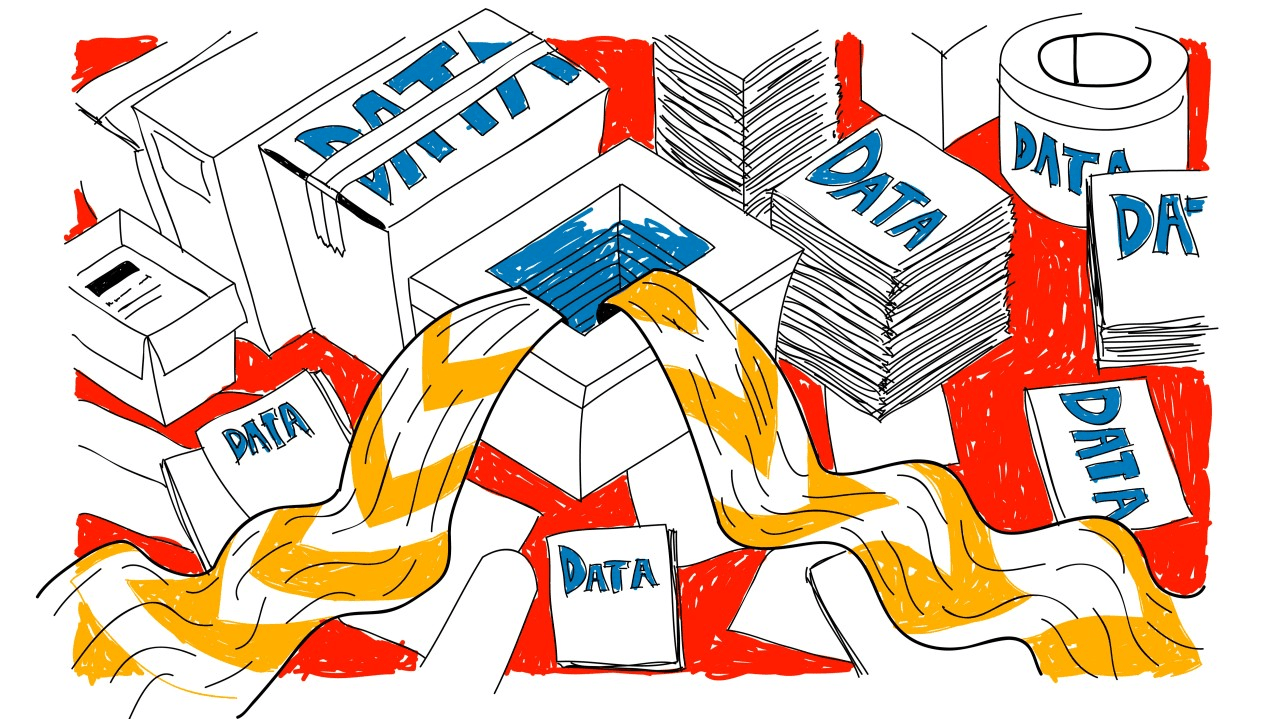
Data is fragmented across departments, tools, and formats — turning accreditation into a last-minute crisis.
Data Fragmentation Crisis
Academic and assessment data scattered across departments, systems, and file formats with no central repository
No centralized repository: Data exists in emails, Excel files, Google Sheets, and departmental silos
Time drain: Faculty spend 40+ hours per cycle manually collecting and consolidating data
Data integrity issues: Multiple versions, inconsistent formats, and lost historical records

Manual Evidence Compilation
Institutions rely on spreadsheets and manual processes to compile evidence for  NAAC,
NAAC,  NBA, and
  NIRF submissions
Spreadsheet dependency: Complex Excel files become the primary tool for managing accreditation data
Manual evidence gathering: Teams spend weeks searching files, emails, and records for proof of activities
Version control nightmare: Multiple people editing different versions leads to conflicts and data loss

Framework Mapping Difficulty
No systematic way to map routine academic work and assessments to specific accreditation framework criteria
Disconnected workflows: Daily academic activities happen without any linkage to accreditation criteria
Retroactive mapping: Faculty forced to manually connect past work to framework requirements during submission
Lost opportunities: Valuable activities go unreported because there's no system to track them against criteria

No Year-Over-Year Continuity
Data collection starts from scratch each cycle with no structured historical records or longitudinal tracking
Starting from scratch: Every accreditation cycle begins with zero structured historical data
Lost institutional memory: No ability to track improvement trends or demonstrate sustained quality over time
Comparative analysis impossible: Can't benchmark progress or identify patterns without longitudinal data

Overwhelming Faculty Workload
Heavy administrative burden on faculty and staff during submission cycles, pulling them away from teaching and research
Administrative burden: Faculty pulled away from teaching and research during peak submission periods
Time consumption: 60-80% of faculty time consumed by documentation instead of core academic activities
Burnout risk: Repeated cycles of last-minute documentation cause stress and reduce job satisfaction

Accreditation as Crisis Event
Accreditation becomes a last-minute emergency instead of an ongoing outcome of well-designed operational systems
Reactive firefighting: Accreditation treated as an emergency event rather than an ongoing process
Last-minute stress: Rushed submissions lead to errors, omissions, and missed opportunities for improvement
Quality compromise: Focus shifts from genuine improvement to just meeting minimum requirements under pressure
From Last-Minute Reporting
to Continuous Readiness
 Acaera
is built around a simple but powerful idea:
If academic data is structured correctly during everyday operations, accreditation and ranking reports should be a by-product — not a separate project.

Event-Based
Accreditation as a periodic crisis
- Panic-driven data collection before visits
- Months of manual report assembly
- Inconsistent & hard-to-verify evidence
- Institutional memory lost between cycles
Continuous
Readiness as a natural outcome
- Always audit-ready, zero last-minute rushes
- Real-time quality metrics & dashboards
- Validated, traceable evidence on demand
- Year-over-year trends drive improvement
Instead of building software just to generate reports, Acaera embeds accreditation intelligence directly into academic workflows.
What “Report-Ready by Design” Means
Capture at Source
Academic data is recorded as activities happen — attendance, grades, research outputs — with no extra effort from faculty.
Map to Criteria
Every data point is automatically linked to NAAC, NBA, NIRF, and other framework criteria — no manual tagging needed.
Track Year-Over-Year
Metrics are compared across years automatically, so you always know where you stand — and where to improve.
Generate from System Records
Reports are assembled from validated, structured data already in the system — one click, not one quarter of effort.
Eliminate Manual Compilation
No more chasing departments for data, reformatting spreadsheets, or copy-pasting into templates. The system does it for you.
Capture at Source
Academic data is recorded as activities happen — attendance, grades, research outputs — with no extra effort from faculty.
Map to Criteria
Every data point is automatically linked to NAAC, NBA, NIRF, and other framework criteria — no manual tagging needed.
Track Year-Over-Year
Metrics are compared across years automatically, so you always know where you stand — and where to improve.
Generate from System Records
Reports are assembled from validated, structured data already in the system — one click, not one quarter of effort.
Eliminate Manual Compilation
No more chasing departments for data, reformatting spreadsheets, or copy-pasting into templates. The system does it for you.
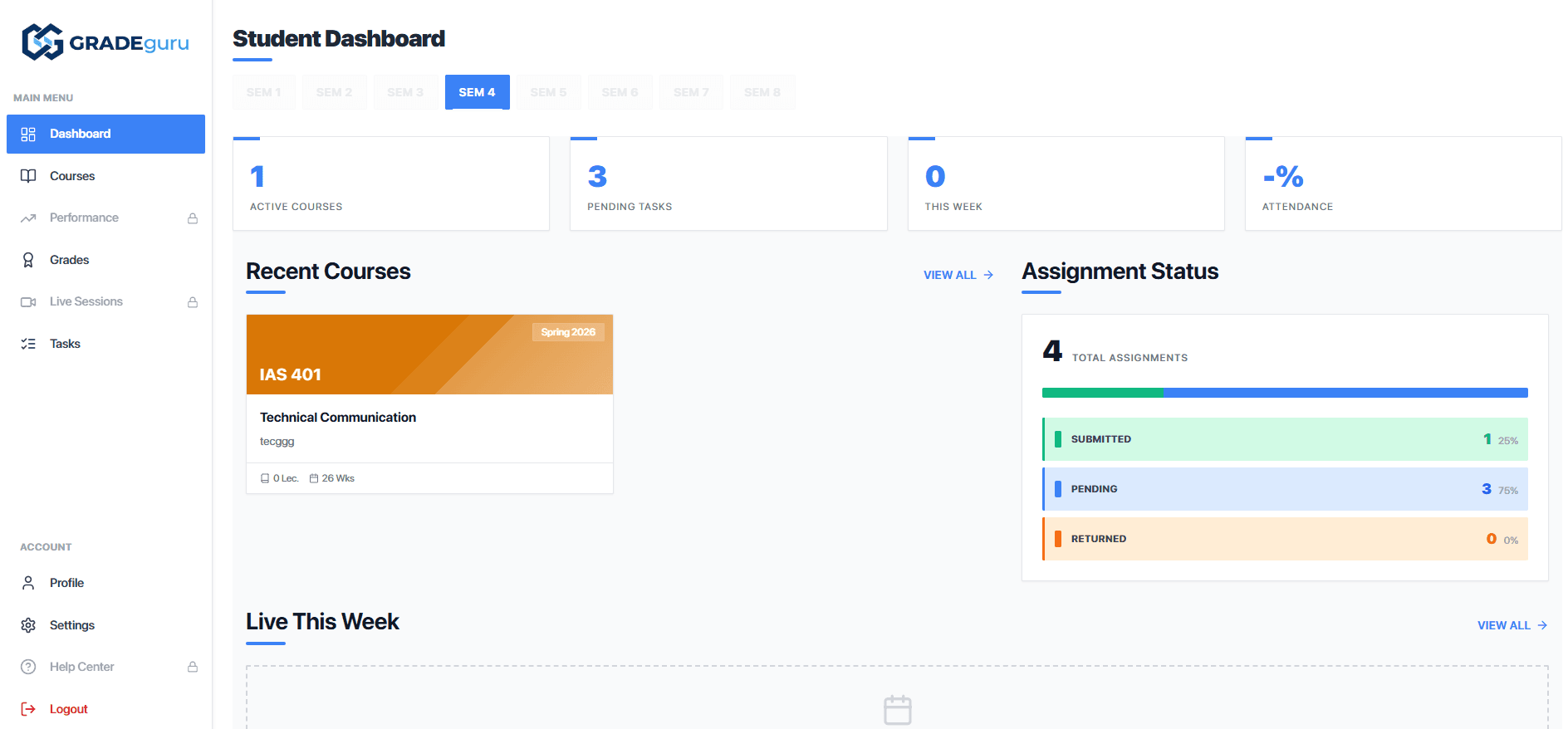
AI-Integrated LMS Focused on Personalized Learning
The Acaera LMS is currently live in pilot at  IET Lucknow.
Why the LMS Matters in an AOS
In Acaera, the LMS is not positioned as a standalone teaching tool. It functions as the primary academic activity capture layer.

Core Capabilities
Personalized Learning Structures
Support for varied learning paths, pacing, and outcomes.
Assessment & Feedback Integration
Academic activities linked to measurable learning outcomes.
Faculty-Centric Academic Workflows
Designed around how educators plan, deliver, and assess learning.
Student Progress Visibility
Clear views of engagement, progress, and academic patterns.
Scoped AI-Assisted Insights
Early AI support for identifying engagement signals and learning gaps.
LMS data feeds directly into accreditation-aligned evidence and metrics.
An Academic Operating System Aligned to NAAC, NBA & NIRF
The LMS alone cannot support accreditation readiness.
The Academic Operating System (AOS) builds on LMS data to create a compliance-ready academic backbone.
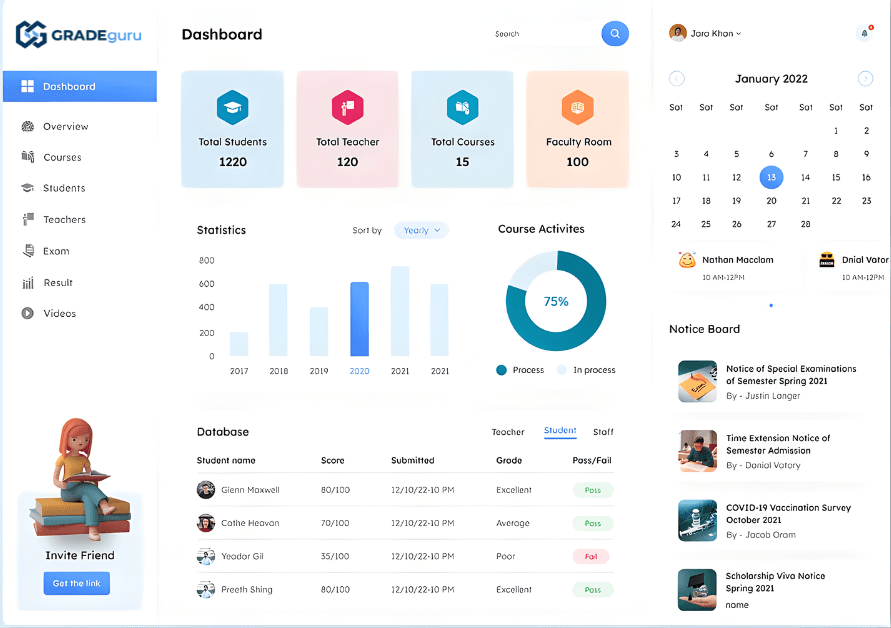
Reporting & Intelligence Layer
Criteria & Metrics Mapping Layer
Evidence & Documentation Layer
Academic Activity & Learning Layer
Click on any layer to explore its details
Accreditation frameworks are treated as system constraints, not afterthoughts.
AI as a Support Layer, Not a Replacement
Acaera applies AI selectively and responsibly — to support academic insight and compliance intelligence, not to automate judgment.
Identifying patterns in academic engagement and outcomes
Highlighting gaps in evidence coverage over time
Supporting internal reviews before submission cycles
Reducing manual effort in data interpretation
Ensuring compliance readiness across standards
Generating actionable reporting dashboards
Identifying patterns in academic engagement and outcomes
Highlighting gaps in evidence coverage over time
Supporting internal reviews before submission cycles
Reducing manual effort in data interpretation
Ensuring compliance readiness across standards
Generating actionable reporting dashboards
Identifying patterns in academic engagement and outcomes
Surfaces trends across semesters — attendance dips, grade distributions, and outcome correlations that inform timely interventions.
AI augments institutional decision-making; it does not replace academic or administrative authority.
Built Through Institutional Research & Real Pilots
 Acaerais shaped through continuous research and on-ground collaboration with institutions.
Study of NAAC, NBA, and NIRF frameworks
Analysis of institutional reporting workflows
Faculty and administrative feedback
Live pilot usage data
Regulatory and compliance considerations
Study of NAAC, NBA, and NIRF frameworks
Analysis of institutional reporting workflows
Faculty and administrative feedback
Live pilot usage data
Regulatory and compliance considerations
The focus is not only what institutions must report — but how they operate between reporting cycles.
Our Continuous Iteration Cycle
Every phase feeds the next — a living loop that never stops improving.
Research
Deep study of NAAC, NBA, and NIRF frameworks to understand every compliance nuance.
Architect
Translating regulatory requirements into intelligent system models and data structures.
Pilot
Real-world deployment with partner institutions to validate assumptions under pressure.
Feedback
Collecting insights from faculty, administrators, and usage telemetry to identify gaps.
Refine
Continuous iteration — every cycle makes the system sharper, faster, and more aligned.
Designed for Institutions That Take Accreditation Seriously
Built for institutions , not just projects .
Collaborative, Pilot-First Engagement
How Institutions Typically Engage
Discussion
Step 01Institutional context & accreditation needs assessment to understand where you stand.
Scope Definition
Step 02Define pilot scope — LMS integration, AOS components, and success metrics.
Deployment
Step 03Guided deployment with hands-on setup, configuration, and institutional onboarding.
Pilot Usage
Step 04Active usage with real academic data, ongoing support, and performance monitoring.
Refinement
Step 05Feedback-driven evaluation, system refinement, and research-informed roadmap evolution.
Discussion
Institutional context & accreditation needs assessment to understand where you stand.
Scope Definition
Define pilot scope — LMS integration, AOS components, and success metrics.
Deployment
Guided deployment with hands-on setup, configuration, and institutional onboarding.
Pilot Usage
Active usage with real academic data, ongoing support, and performance monitoring.
Refinement
Feedback-driven evaluation, system refinement, and research-informed roadmap evolution.
This ensures relevance, rigor, and long-term institutional fit.